

VIP & Executive Cyber-Physical Protection
The Threat You Can't See
AirShield finds the cameras, microphones, trackers and interceptors hiding in the places a principal lives, works and travels.
Physical security is a solved problem. A detail controls the doors, the routes and the room. It cannot control the airwaves — and that is where modern surveillance now lives. A camera the size of a shirt button. A tracker magnet-mounted under a bumper. A cell interceptor in the suite next door.
Every Environment a Principal Moves Through
Residence
Estates, guest houses, staff quarters and grounds.
Vehicle
Motorcades, daily drivers and hired cars.
Aircraft & Yacht
Cabins, hangars, marinas and crew spaces.
Hotel, Office & Boardroom
Suites, adjoining rooms, event floors, executive floors, deal rooms and family offices.
Six Categories, One Sensor
Hidden Cameras
Wireless spy cameras concealed in rooms, fixtures, vehicles and gifts.
Listening Devices
Covert audio bugs and transmitting microphones, on or off the network.
Cell Interceptors
IMSI catchers positioned to capture calls, messages and device identity.
GPS Trackers
Covert location beacons attached to vehicles, luggage and personal effects.
Rogue Networks
Impersonated Wi-Fi, rogue hotspots and evil-twin traps built to harvest.
Drones Overhead
Camera platforms over property lines, helipads, marinas and arrivals.
Wearable Cameras
Camera-equipped smart glasses and body-worn recorders in rooms where a phone would be challenged.
Badge & Access Cloning
Multi-tool RF devices used against RFID credentials, gates and building systems.
How Modern Surveillance Against Executives, Dignitaries And Elites Actually Works
These are the operating patterns behind the incidents protective details are increasingly asked about. Each one is invisible to cameras, guards and access control — and visible in RF.
The device that shouldn't be in the room
A person present at a meeting, a residence or an event is carrying a phone, a recorder or a tracker they should not have. Nobody searches a guest, a contractor or a member of staff.
Every emitting device in the space, classified by type and vendor and placed by location — including devices that never join any network. A device present at three separate meetings it had no reason to attend is a pattern, and the pattern only exists if someone kept the record.
Aerial reconnaissance before a home intrusion
Small drones are increasingly used to survey private residences ahead of a burglary or intrusion — mapping approaches, camera placement, lighting, patrol timing and whether anyone is home. The flight itself is brief and easy to miss.
The controller link is detectable during power-up and pre-flight, frequently before the aircraft leaves the ground and from well outside the property line. The operator's position is the actionable element — a drone overhead is a symptom, a located operator is something law enforcement can act on.
Micro and nano airframes indoors
Camera-carrying aircraft have shrunk to a scale that makes visual detection unreliable indoors and around executive floors. Size, however, does not remove the control link — a smaller airframe still has to be flown.
Classification triggers on the RF signature rather than the airframe, so detection does not depend on anyone seeing the aircraft. Where the threat set includes pre-programmed or tethered platforms that emit nothing at all, acoustic sensing covers what RF structurally cannot.
Smart glasses and wearable recorders
Camera-equipped eyewear records in settings where producing a phone would be challenged immediately. In a boardroom, a private dinner or a family office, nobody asks a guest to remove their glasses.
Wearables emit like any other device. They are identified by protocol behavior and device signature rather than by appearance — which is the entire point, because appearance is exactly what they are designed to defeat.
A Sweep Certifies a Room for the Moment It Ended

AirShield is entirely passive. It transmits nothing, interferes with nothing, and gives away no signature of its own — so the people watching your principal never learn that someone is watching back.
The Rest of the Detail
Detection is one layer. A protective programme needs the people, the analytics, the notification path and the physical controls around it.
AirShield — Detection
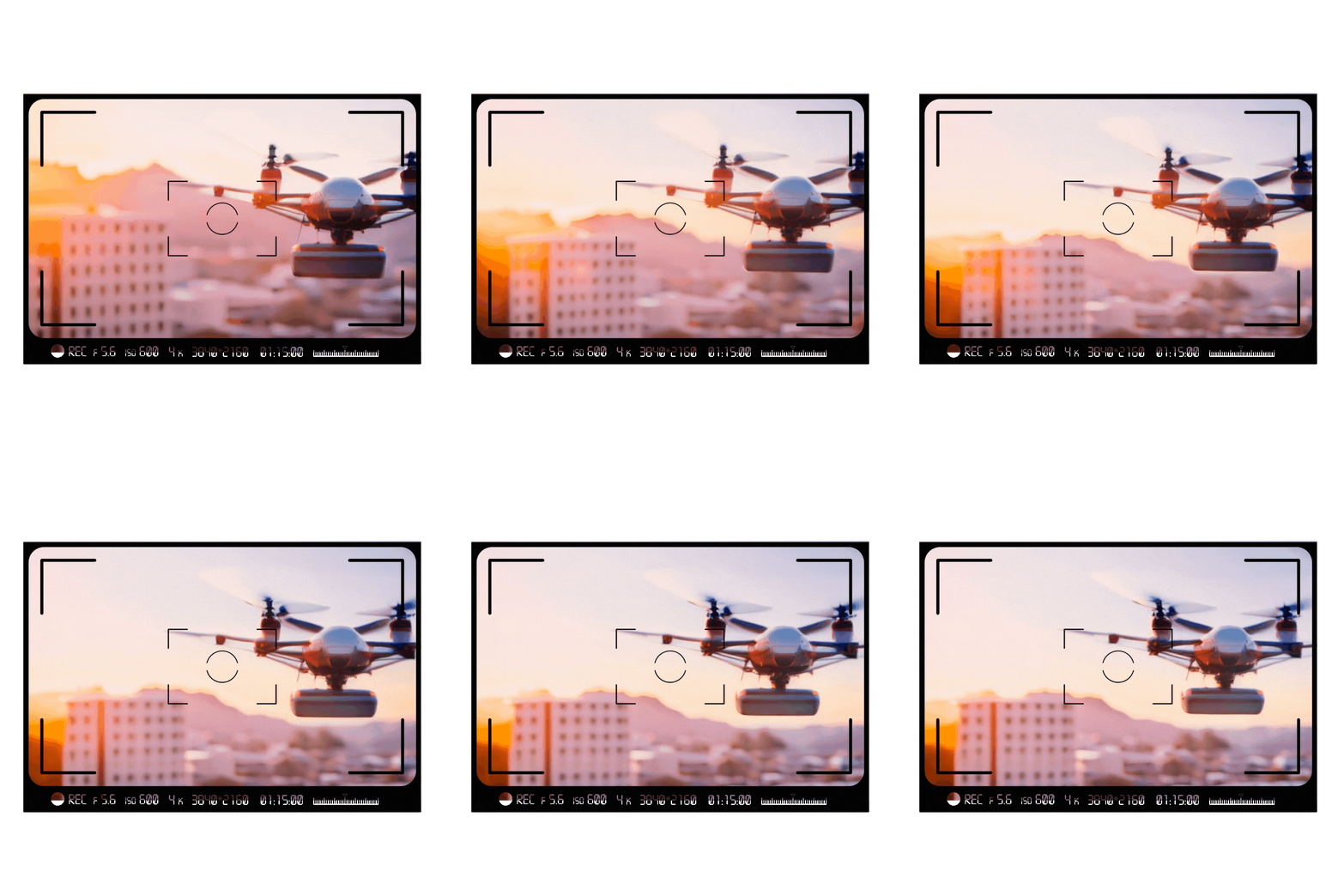
SkyShield — Airspace

SAFE Perimeter AI — Learning & Alerting
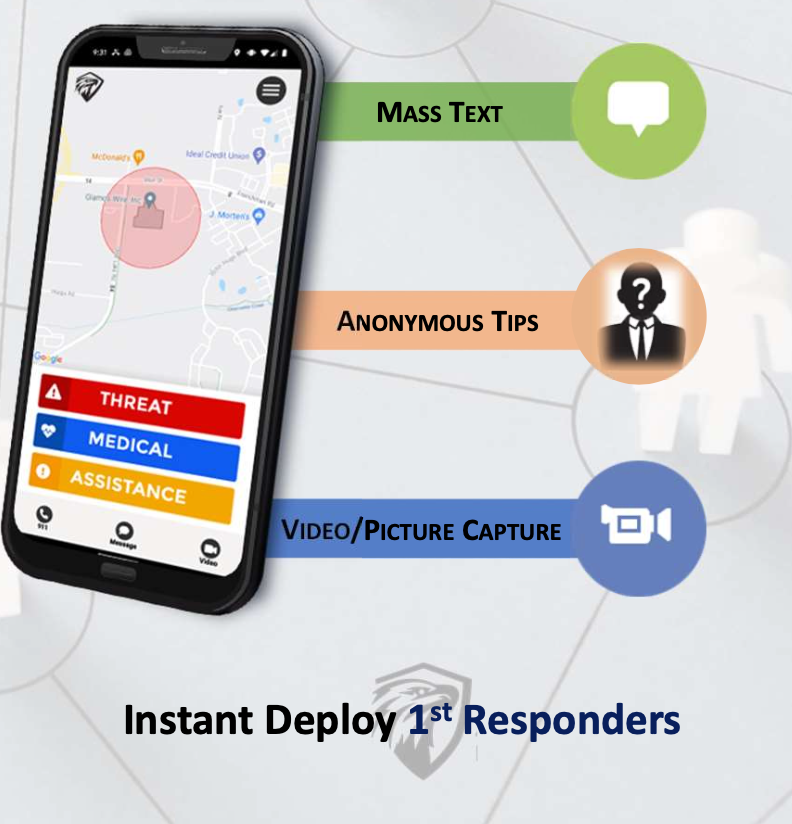
Response & Access Control
Deploy, Detect, Decide
Deploy
Discreet sensors at the residence, office, aircraft or vessel — and an executive backpack that moves with the detail.
Detect
Silent, passive listening across the full commercial spectrum. Every emitter is identified, classified and placed.
Decide
Real-time alert to your team, the device located for recovery, and the event preserved as a record.
Retain
The RF log stays replayable, so a question asked next month can still be answered with evidence rather than memory.
Drone detection can be deployed today by private operators. Active mitigation remains restricted under federal law to authorized federal agencies and, under emerging authority, certified state and local law enforcement. AirShield detects devices that transmit — the RF layer that physical inspection cannot reach.
Confidential by Default
Client relationships in executive protection are not published, and we do not publish ours. Contact us directly to discuss a principal, a residence or a travel profile.
contact@safe-perimeter.com · (404) 590-6258