Cyber-Physical Infrastructure Protection
Autonomous Critical Infrastructure Protection
Three layers, one console: the airspace above the site, the wireless layer around it, and the control network inside it.
A refinery, a hospital, a data center or a distribution center is fenced, badged and patrolled. Its wireless perimeter and its control network usually are not. Every contractor hotspot, wireless field instrument, legacy connected device and internet-facing controller is an entry point — and most operators have no continuous way to see it, or to see what happens once someone gets in.
Air, RF, and the Control Network
Correlated alerts across all three domains rather than three separate tools that never speak to each other.
Air Domain — SkyShield
Group 1–2 drone detection, direction finding and tracking to 7–14 km. Rooftops, tank farms, generator yards, helipads and loading docks have no roof — only airspace.
Wireless RF — AirShield
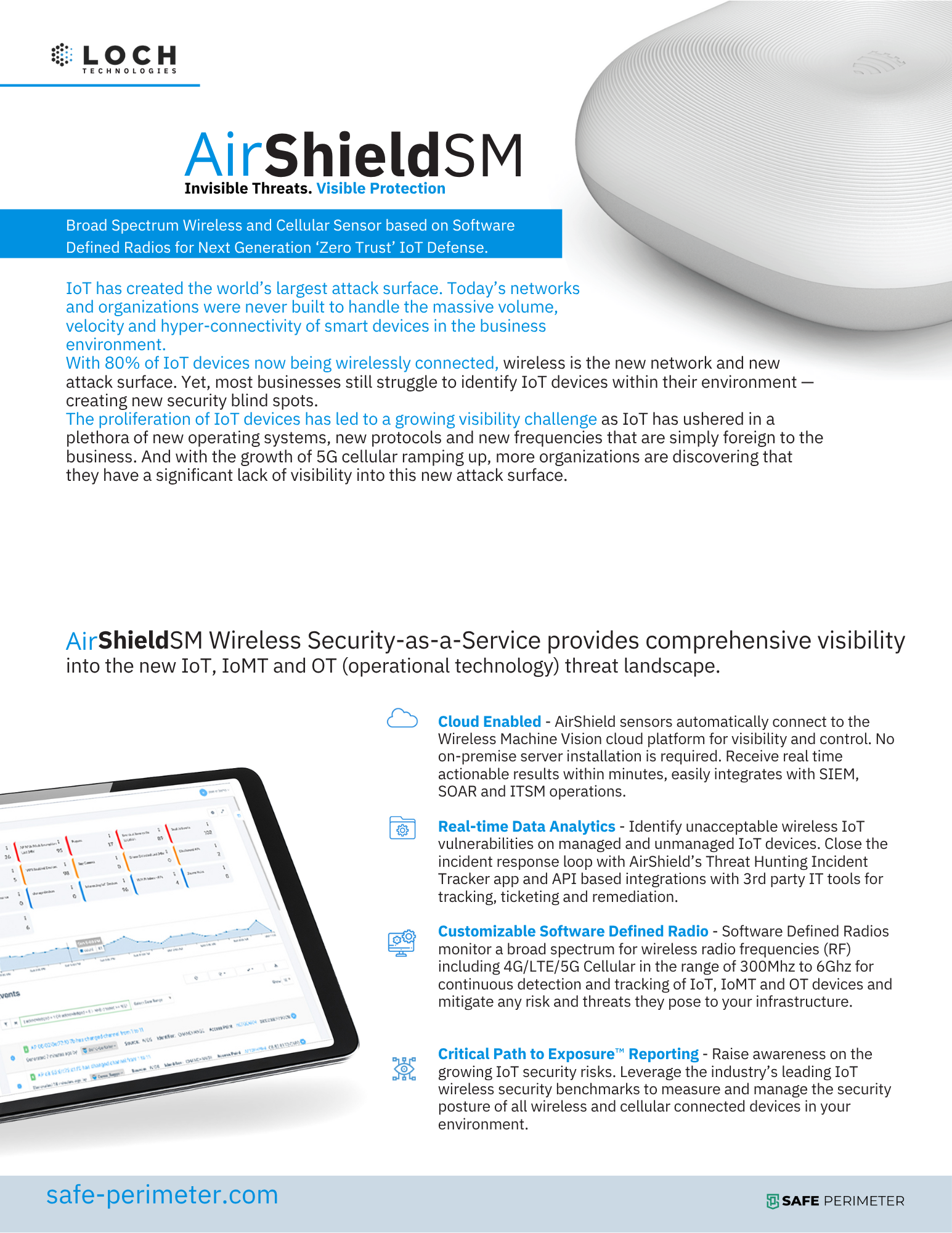
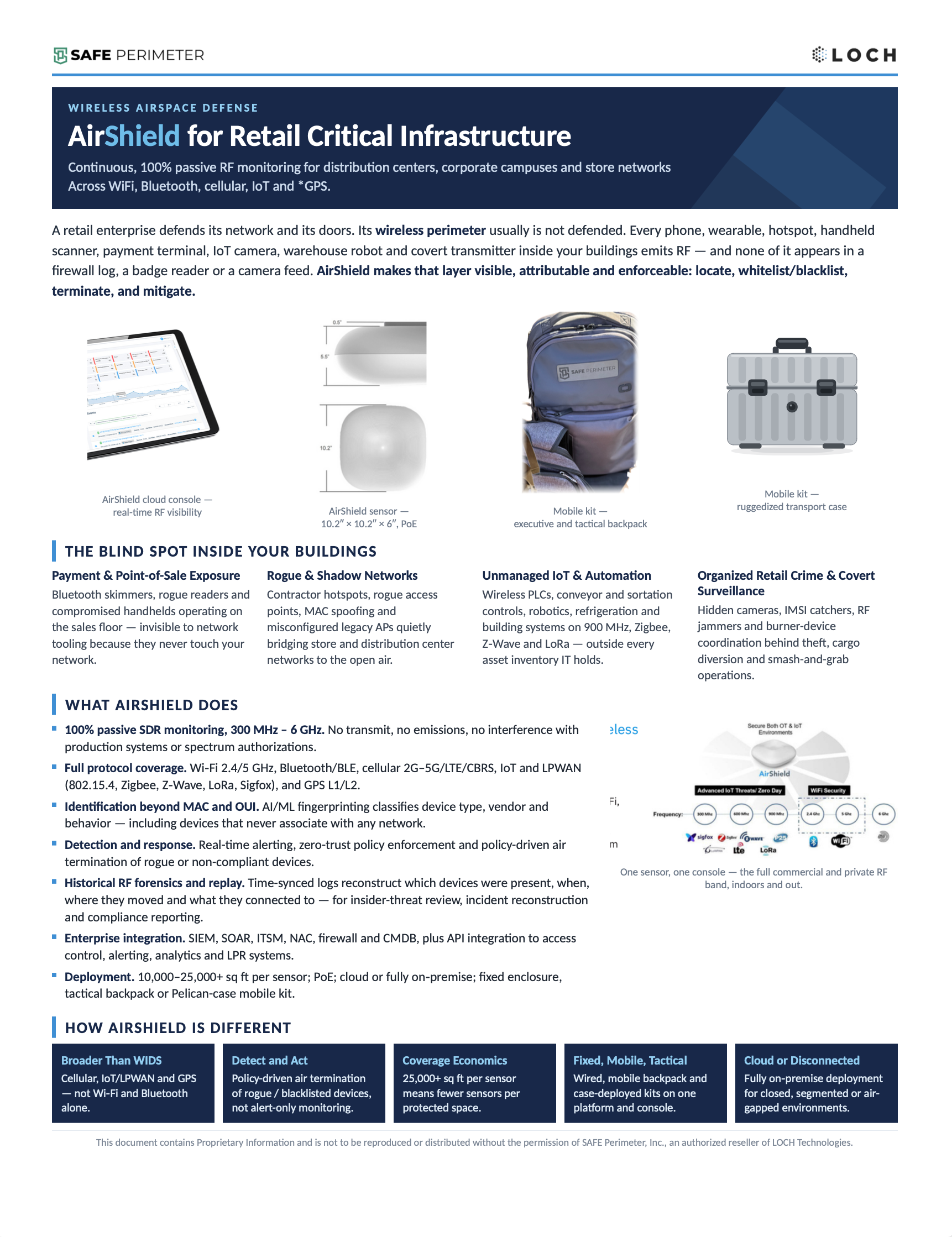
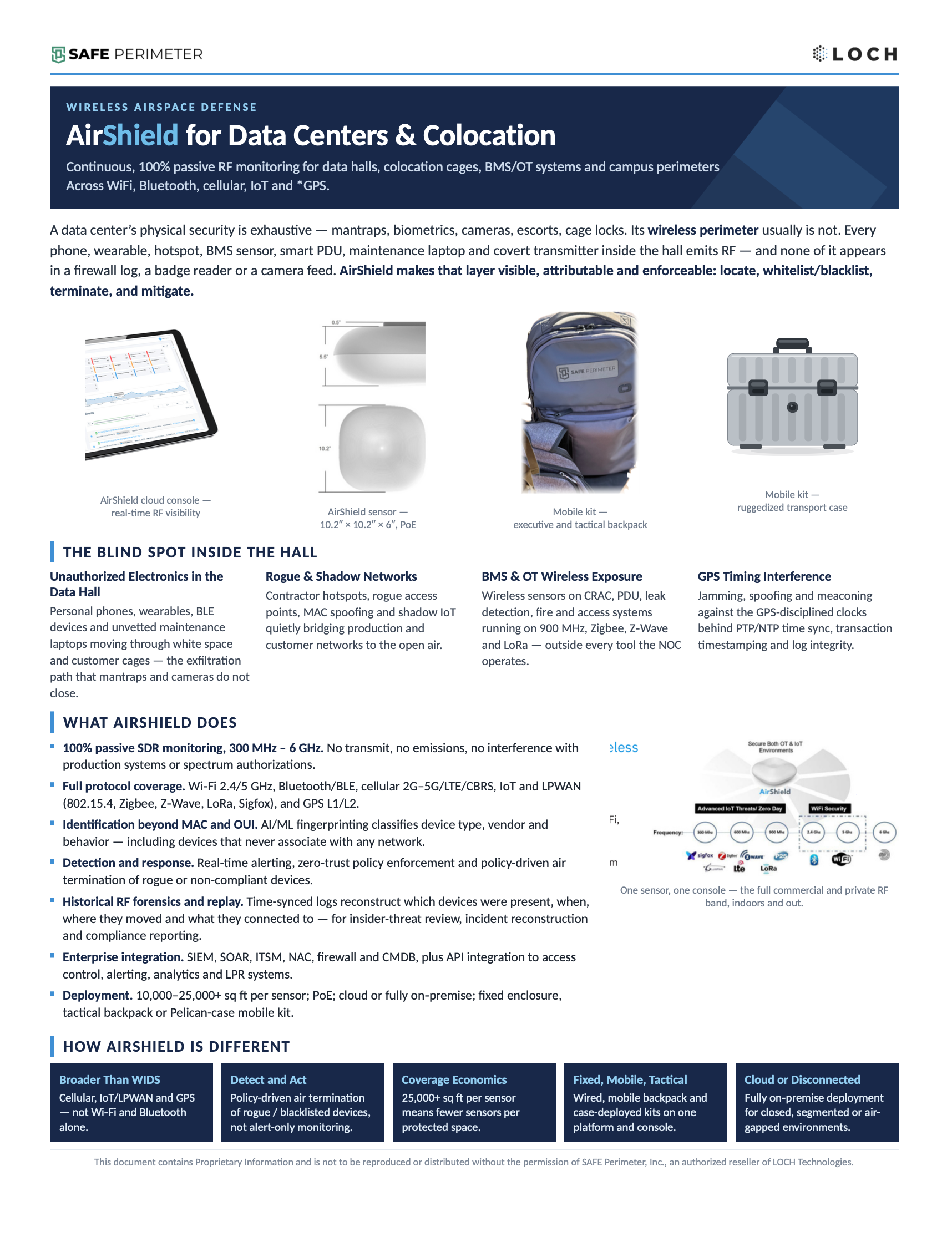
The full commercial and private band, indoors and out, on a single sensor — including the protocols that never touch your network.
Network Layer — SAFE Perimeter AI
Autonomic anomaly detection and automated response on the control-system network itself — behavioral analysis of end devices, protocols, sensors and actuators.
Correlated, Not Siloed
A drone incursion, the RF anomaly it causes and the resulting network anomaly appear in the same console — physical and cyber in one operating picture.
The Same Blind Spot, Four Different Shapes
The exposure is structurally identical across sectors. What changes is the equipment behind it and the regulator asking about it.
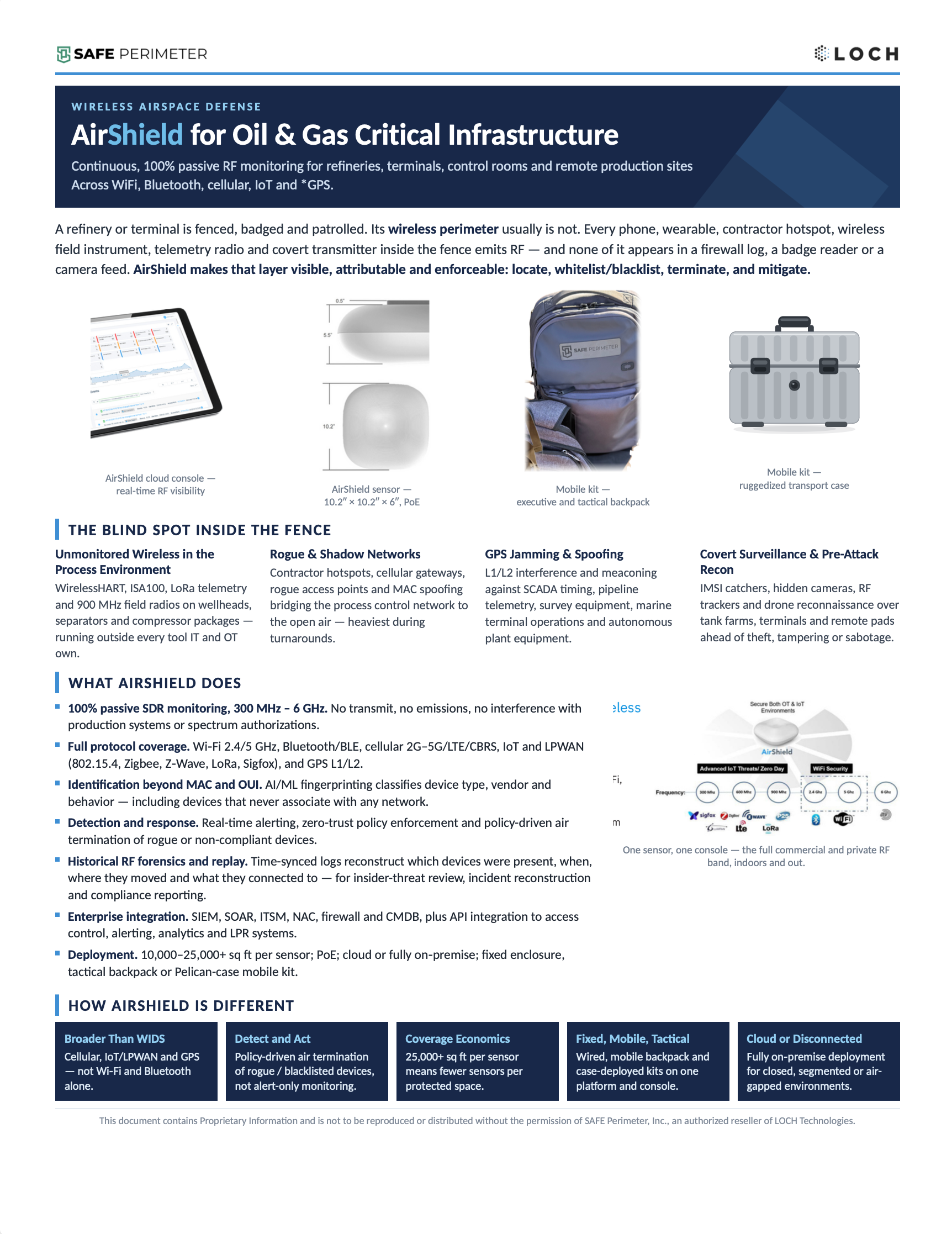
Oil & Gas
Refineries, terminals, compressor stations and remote production sites.
- Unmonitored process wireless. Industrial telemetry and field radios on wellheads, separators and compressor packages — running outside every tool IT and OT own.
- Turnaround exposure. Hundreds of contractors and thousands of unvetted devices arriving at once, the heaviest risk window of the year.
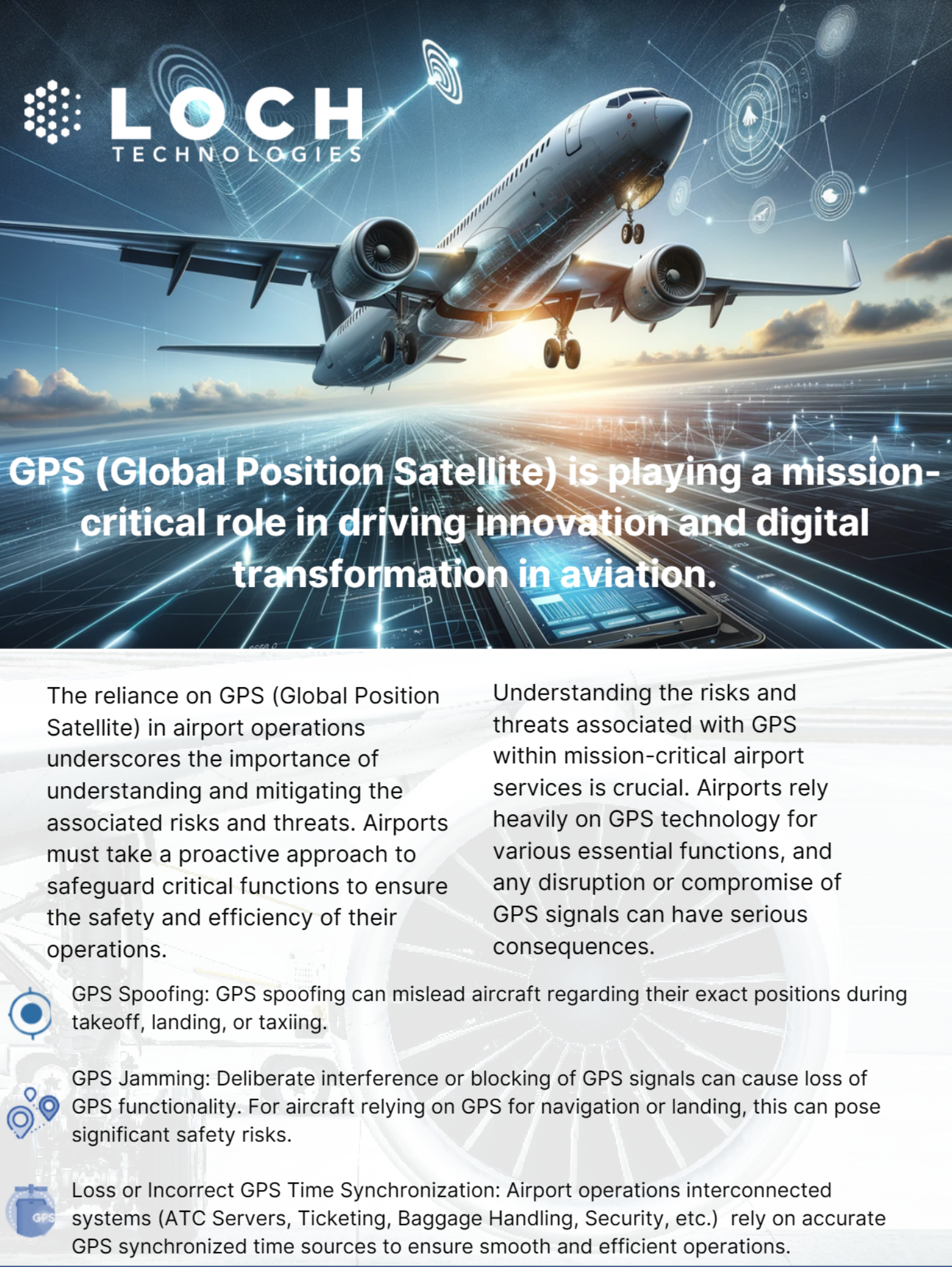
- GPS interference. Jamming and meaconing against SCADA timing, pipeline telemetry and marine terminal operations.
- Compliance. TSA pipeline security directives, API 1164 and IEC 62443 all want continuous monitoring and a documented asset inventory.
Healthcare & IoMT
Hospitals, health systems and connected medical environments.
- Unpatchable legacy devices. Infusion pumps, patient monitors and imaging systems running legacy operating systems that cannot always be patched without FDA revalidation.
- Clinical-area wireless. Telemetry and patient monitors in treatment areas, outside IT and biomed visibility.
- Passive by necessity. Active scanning is unsafe for fragile clinical systems. Discovery here has to be listen-only.
- Compliance. HHS OCR and FDA guidance call for continuous asset inventory and documented network segmentation.
Critical Infrastructure & Utilities
Water and wastewater treatment, power and grid operations, data centers, telecom and transportation.
- Unmonitored control system wireless. SCADA links, remote pump and lift stations, substation telemetry and building systems running outside what the control room actually monitors.
- Vendor and shared access. Contractor hotspots, remote-maintenance connections and tenant equipment bridging a control network to the open air.
- GPS timing. Interference against the clocks that synchronization, billing, transaction logging and grid coordination depend on.
- Compliance. AWIA risk assessments and EPA guidance for water systems, NERC CIP for the grid, and PCI DSS, SOC 2 and ISO 27001 for data centers.
Retail & Distribution
Distribution centers, store networks, corporate campuses and the payment environment.
- Point-of-sale exposure. Bluetooth skimmers, rogue readers and compromised handhelds that never touch the corporate network.
- Unmanaged automation. Wireless controllers, sortation, robotics and refrigeration on industrial bands — outside every asset inventory IT holds.
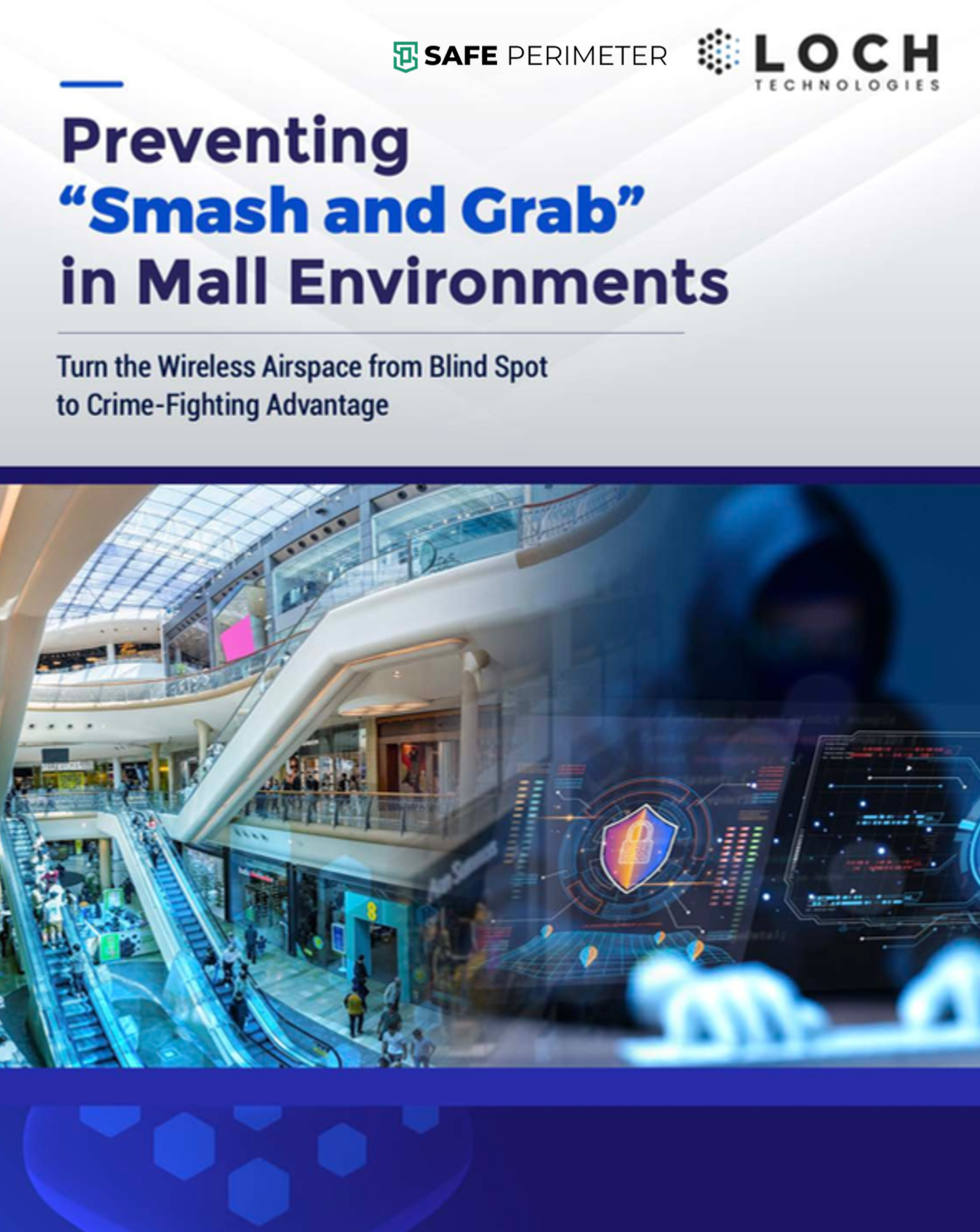
- Organized retail crime. Burner-device coordination, illegal jammers against alarms and radios, and drone reconnaissance of yards and rooftops ahead of a hit.
- Compliance. PCI DSS requires wireless scanning and a clean asset inventory across the PoS estate.
Autonomic Self-Protection
Federal advisories describe attackers changing credentials and IP addresses to lock operators out of monitoring and control systems, forcing manual operation. The window between intrusion and lockout is short, and it does not wait for someone to notice.
The SAFE Perimeter AI response engine is modeled on a human immune system.
- Autonomic. Works like self-protection, without waiting on a person to notice.
- Automated. Minimal human intervention, removing the weakest link in the response chain.
- Intelligent. Uses AI to continuously learn and improve detection.
- Instantaneous. Designed to respond before an attacker can complete a lockout or move laterally.
Eight Things Most Wireless Tooling Cannot Claim
Broader than WIDS
Cellular, IoT and satellite navigation — not Wi-Fi and Bluetooth alone.
Detect and act
Policy-driven air termination of rogue or blacklisted devices, not alert-only monitoring.
Coverage economics
25,000+ sq ft per sensor means fewer sensors per protected space.
Budget displacement
Continuous inventory replaces the manual quarterly sweeps compliance frameworks already require.
Fixed, mobile, tactical
Wired, backpack and case-deployed kits on one platform and console.
Cloud or disconnected
Fully on-premise deployment for closed, segmented or air-gapped environments.
Safe for fragile systems
Passive discovery for control systems and clinical devices that cannot tolerate active scanning.
Defensible evidence
Time-synced, exportable records for investigators, auditors and regulators.
Assess, Pilot, Scale
Assess
A short RF baseline at one representative site establishes what is actually transmitting in and around your facility today.
Pilot
Sensors go live at a single site or highest-risk area, integrated with your existing SOC and incident tooling.
Scale
The proven configuration rolls out across the portfolio, with cross-site device identity linking turned on.
Operate
Your SOC runs it with our training and support, or we run it for you as a managed service.
For private critical infrastructure operators, drone and RF detection can be deployed today. Active mitigation remains restricted under federal law to authorized federal agencies and, under emerging authority, certified state and local law enforcement — so SkyShield is fielded as detection now, with mitigation staged against a law enforcement partnership or new statutory authority. Air termination applies to devices operating on infrastructure the operator owns and controls.
Start With the Baseline
One representative site, measured rather than assumed. It is the fastest way to know whether the wireless and airspace layers around your facility are actually clean.
contact@safe-perimeter.com · (404) 590-6258
Hello, World!
(Click to Download Whitepapers + Data Sheets)